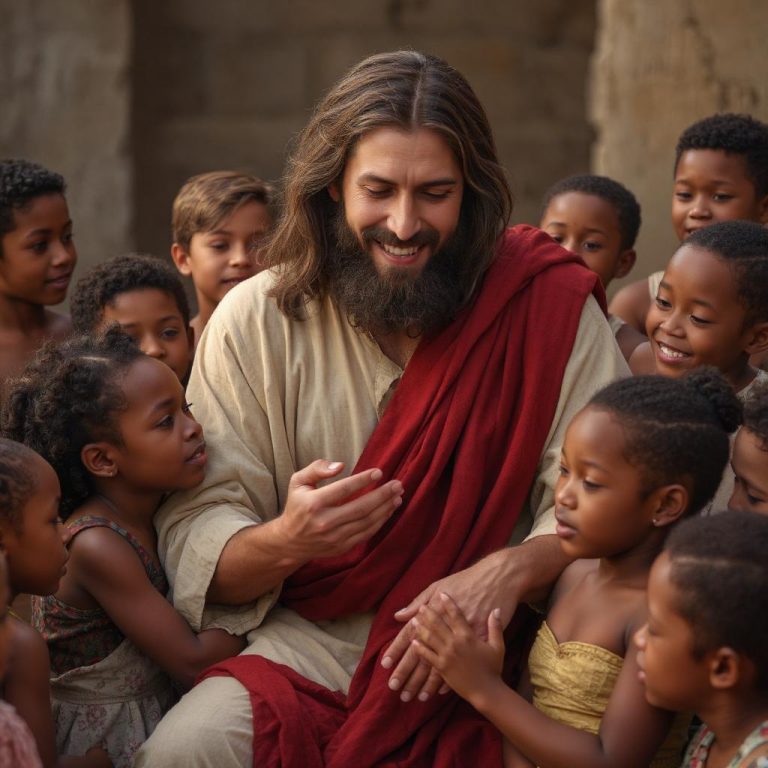
Excerpts from stejnomenné book Norman Geislera and Frank Turk
…
Introduction
When asked Mortimer Adler, who edited a series of books ‘the Great books of the western world’, why is the section of ‘God’ in a whole series of these books the most comprehensive, shrewdly remarked, that has more implications than any other topic. In fact, five vitally important:
1. Origin: Where did we come from?
2. Identity: Who are we?
3. Meaning: Why are we here?
4. Morality: How should we live?
5. Destiny: Where are we going?
The answer to each of these questions depends on the existence of God. If there is a God, then your life has ultimate meaning and purpose. If your life has a deeper meaning, then there’s a right and wrong way to live it. The decisions that now you do, affect not only your life, but also affect you for eternity. On the other hand, if there is no God, then your life is ultimately no lasting does not make sense. Thus, there is no right or wrong way to live it. And it doesn’t matter how you live.
…
WHAT KIND OF GOD?
Before we continue, let’s make sure we’re clear on the terminology. Most of the major religions of the world falls into one of these three religious world views: theism, pantheism and atheism.
Theist is someone who believes in a personal God who created the universe, but is not part of the universe. That could be compared to painters and painting. God is like a painter and his creation is like a painting. God painted a picture, and in him manifest his qualities, but God is not a picture. The main teistickými religions are christianity, judaism and islam.
In contrast, the panteista is someone who believes in an impersonal God who is literally the universe. instead of God painting, panteisté believe that God is the image. In fact panteisté believe that God is all there is: God is grass; God is the sky; God is a tree; God is this book; God is you; God I I; etc. the Main panteistická religion are eastern religions such as hinduism, some forms of buddhism and many forms of ‘New Age’.
An atheist is, of course, someone who doesn’t believe in any god. To continue our analogy, atheists believe that’s what it looks like a painting, there have always existed, and no one painted. In this category would be included religious humanists.
Here is an easy way to remember these three religious views on the world:
theism – God created everything;
pantheism – God is all;
atheism – no God.
Another concept that we often use, it is an agnostic. is someone who is not sure the question of God. Now, when we have defined the concepts, let’s get back to the question of faith and religion.
FAITH AND RELIGION
Despite their apparent persuasiveness is not the claim that religion is only a matter of faith, nothing more than a modern myth – it’s just not true. Though religion certainly requires faith, religion is not only about faith,. Facts are also the focal point of all religionbecause all religious views of the world (including atheism) makes a claim about the truth. And many of these claims about the truth can be evaluated through scientific and historical research. Theists (such as christians, muslims, jews) claim that the universe had a beginning, while many atheists and panteistů (such as the followers of the New Age, the hindus) say they do not (the universe is eternal).
This is a mutually exclusive claim. Both cannot be correct. Either the universe had a beginning or not. On the basis of an examination of the nature and history of the universe we can reasonably come to the conclusion that one view is correct and the other incorrect.
Another example is the alleged resurrection of Christ. , Christians claim that Jesus rose from the dead, while muslims say that Jesus never died. Again, that one of these views is correct and the other incorrect. How can we figure out which one is correct? The fact that each of these conflicting claims about the truth if we compare with the historical evidence.
Note that not only different religions attempt to answer these questions, but even scientists have to these issues of what to say. This means that science and religion are often dealing with the same questions: Where the universe came from? Where it comes from life? Are miracles possible? …and so on. In other words, science and religion are not mutually exclusive categories, as some suggest.
Certainly not all religious claims can be subjected to scientific or historical research. Some are neověřitelným dogma. , However, the validity of many religious beliefs can be verified. Some of the beliefs are reasonable – can with a high degree of certainty to prove – while others are clearly unreasonable.
PROBLEMS WITH CHRISTIANITY
Is christianity rational? We believe that yes. However, if a person thoroughly won’t examine the evidence with an open mind, it can be faith in christianity appear to be as problematic…. There are many questions relating to christianity, but in spite of these intellectual, emotional and clearances conditional obstacles we argue that the difficult is not faith in christianity, but faith in atheism or any other religion. , This means that as soon as one looks at the evidence, we believe that to be unchristian requires more faith than to be a christian. It may seem like a claim, which is contrary to common sense, but it proceeds simply from the fact that every religious world-view requires faith – even the world’s opinion, which says that God does not exist.
Why? Because, as limited human beings possess no kind of knowledge that would provide absolute proof of the existence or non-existence of God. In addition to the knowledge of our own existence (I know I exist because I exist, I could consider the question) we move in the field of probability.
Whether we come to any conclusion about the existence of God, it is always possible that the opposite conclusion is true. In fact, it is possible that our conclusions in this book are wrong. We don’t think so, because we have good evidence that support them. In fact, we believe that our conclusions are true without any doubt. (This type of certainty, say 95% or more, it is the best, what can human fallibility and limitations of people to reach on most issues, and it’s more than sufficient for even the most important decision in my life.) However, it takes a certain faith, in order to overcome the possibility that we’re wrong.
THE FAITH OF ATHEISTS
Although our findings require a certain degree of faith, it is often forgotten that faith is necessary for the adoption of any belief, including atheism, and pantheism. We recently recalled an atheist named Barry, who we met at one of our seminars. Barry couldn’t believe that our mutual friend Steve became a christian.
He said: ‘Steve, I don’t understand. He claims that he’s an intellectual, but he is unable to answer all the objections, which I ask about christianity. He says he doesn’t have all the answers, because he is a rookie and still learning.“ I (Frank) I said, ‘Barry, it is virtually impossible to know everything about a particular topic, and it’s definitely impossible, when it is the topic of the infinite God. Must come a time when you realize that you have enough information, you’ve come to the conclusion, although there remain unanswered questions.’
Barry agreed, but still didn’t realize that he’s doing exactly what Steve criticized. Barry decided that his opinion – atheism – is correct, even if not exhaustive information, that would back him up. He knew with certainty that God does not exist? Explore all of the arguments and evidence for the existence of God? He had a complete information about the God question? Could the answer to all objections against atheism? Of course not. In fact, it would be impossible.
An atheist must have a much greater faith than christian! What Geisler and Turek she thinks about? We mean, that the less evidence for your opinion you have, the more faith you need to believe (and vice versa). Faith fills the gaps in knowledge. And it turns out that atheists have in your knowledge, the greater the gap, because they have much less evidence for their beliefs than christians for their. in Other words, empirical, forensic and philosophical evidence strongly support the conclusions, which are in accordance with christianity and inconsistent with atheism.
Fourth, we present the evidence for christianity, because we should live your life based on the truth. Socrates once said that the unexamined life is not worth living.3 we Believe that the unexamined faith is not worth believing. In addition, contrary to popular opinion, christians do not have a ‘just believe’. Christians have a duty to know what they believe and why they believe. they Have a duty to answer to those who ask (1. Peter 3:15), and refute arguments against the christian faith (2. Corinthians 10:4-5). Since God is rational (Isa 1:18), and he wants us to use your mind. Christians don’t get points for it, they are stupid.
In fact, the use of reason part of the greatest commandment according to Jesus: ‘Love the Lord your God with all your heart, all your soul and all your mind’ (Matt 22:37).4
In the end often ask us: ‘If christianity is so much evidence, why doesn’t more people?’ Our response: Although we believe that the evidence, which we are about to present, to prove that the Bible is without a doubt true, no amount of evidence can not make anyone in her believe. Faith requires the approval of not only the mind, but also will. While many of the infidels has honest intellectual questions, we found that a lot more people seem to have the will to resist christianity. In other words, it’s not that they don’t have evidence to believe, but believe they don’t want to. ‘It is our preference that decides against christianity, no arguments.’6
God provided for in this life enough evidence to convince anyone who is willing to believe, but at the same time leaving some ambiguity, to force those who don’t want to believe. in This way God gives us the ability to love Him or reject Him without without violating our freedom.
The continuation of part 1